Sebenik to Corfu- 2nd to 3rd November 2015

We set off from Sebenik at 1550 on 2nd November on what would be the longest single leg of the journey so far, hoping for good seas and no Bora.  As we were exiting Croatian waters we had to move into international waters at the earliest opportunity which meant sailing some 12 miles offshore.  Several people were following us on the Findship App and I’m sure they were starting to wonder why we were heading off to Italy!

Alan had organised the watch rotation so that we had two hours on and six hours off, which was not too taxing.  We had initiated the watch rota in the ill-fated first leg from Portoroz but the Bora put paid to that so it was not until this point that we were really able to put the rota into practice.

Alan was first on watch and did the stint from 1800 to 2000, followed by Jon who did 2000 to 2200.  I did 2200 to midnight, followed by John from midnight to 0200 and so on until the 24 hour cycle was completed.  In the next cycle the idea was for everyone to march forward two hours so that I, for example, would start my first night watch at midnight rather than 2200, and we would then follow on in the same rotation as before.

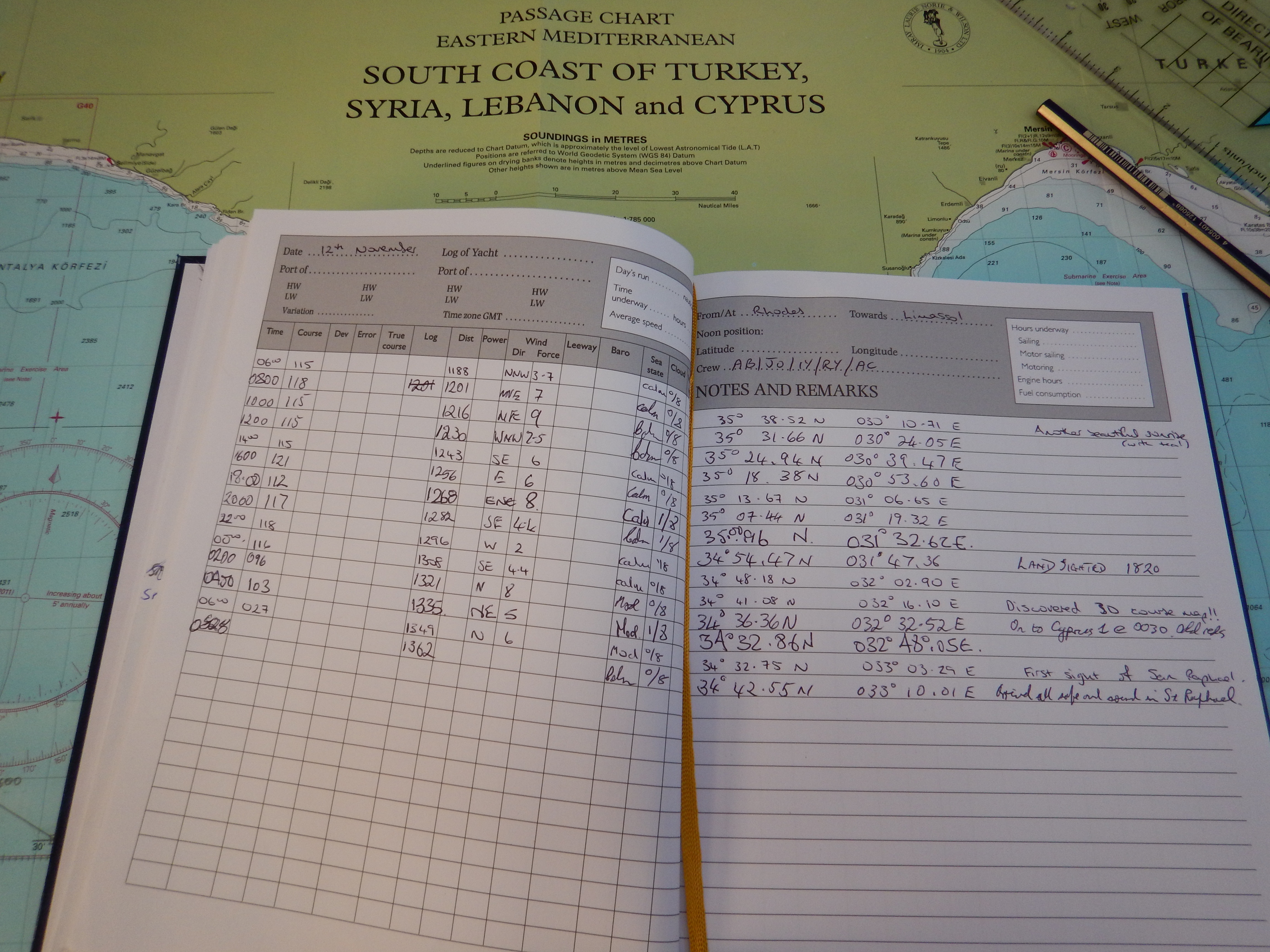
All in all it worked quite well and the two day journey to Corfu passed without much incident.  The duties of the person coming on watch were to take a briefing from the person going off watch, make the entry into the ship’s log and mark the chart, as well as making the tea/coffee as appropriate.  By this process we kept a two-hourly record of progress so that if for example Mr Bean managed to take all of our electronic navigation system off line we would at least know where we were no more than two hours before and would know also the direction in which we were traveling and our speed.  Nobody was in the mood to trust Mr Bean!
DSCN1752
Ship’s Log

We would also enter into the log any events worth noting, such as marine wild life, shipping traffic etc.  On 3rd November for example Alan spotted on the radar a couple of vessels off our port side some several miles away.  They seemed to be together on the AIS system and we could not quite work out what was going on.  By the time I came on watch at 0200 we could see that they were some distance apart, probably half a mile, and moving very slowly.  One was a large tanker and the other a tug boat and the obvious conclusion was that the tanker was under tow.  In the dark it is not easy to work out what is actually going on and it was not until we got to within a couple of miles or so of the two vessels that we could see from the tug’s towing lights that the tow line was in excess of 200 meters, way in excess of 200 meters!  Alan left me with instructions to give both vessels a wide berth and I was only too pleased to comply.
DSCN1646

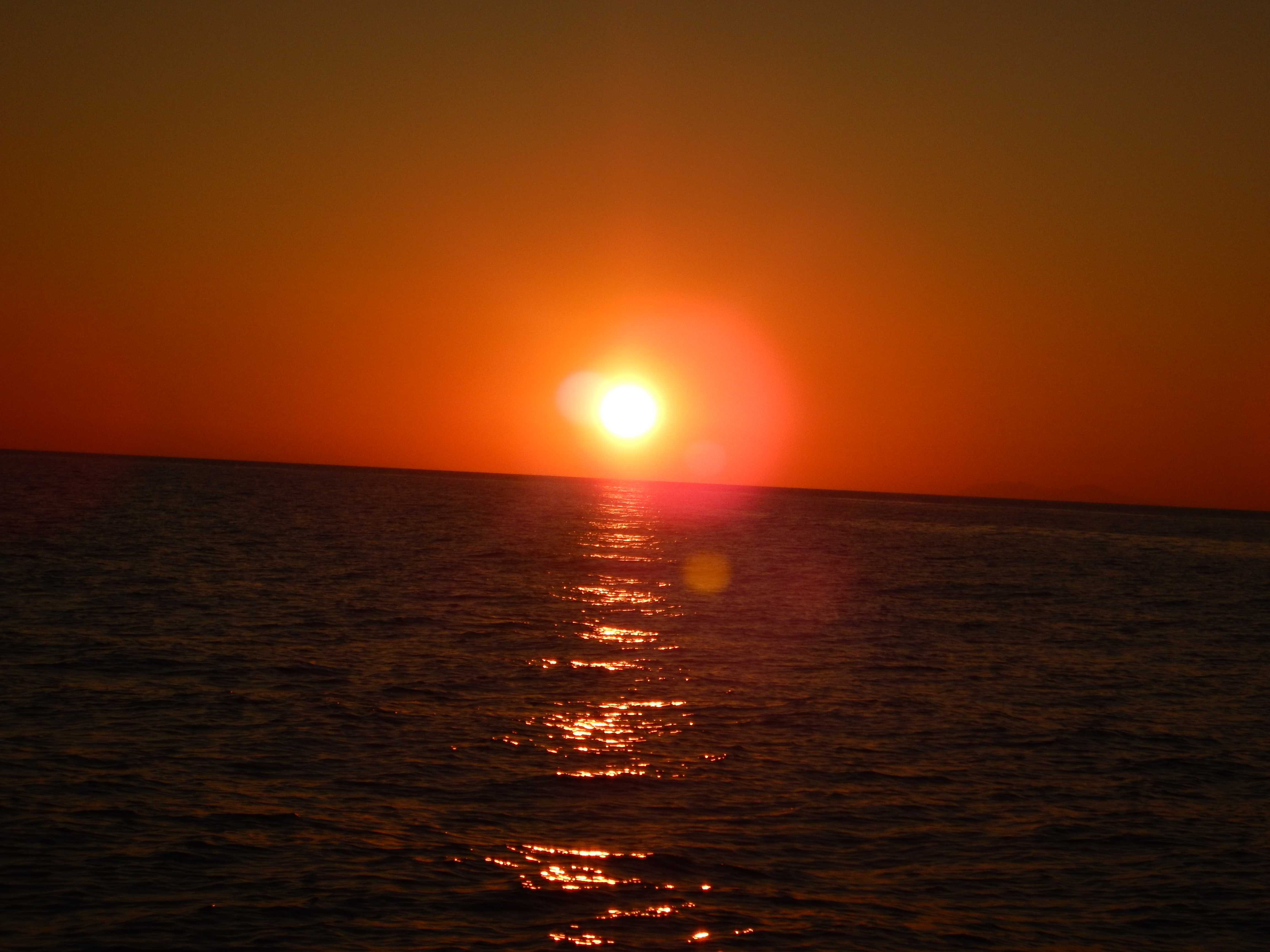
For me the best watch was 0600 to 0800.  Sunrise was usually around 0615 and it is a glorious sight to watch the sun pop up over the horizon.  On land it is difficult to experience this because normally there are hills or high buildings in the way.  At sea there is only the horizon and in all of our journey we hardly saw a cloud so every dawn was bright and clear.  And when I say the sun just pops up that is exactly what it looks like.  One minute nothing, the next it is there, like a beach ball bobbing to the surface of a pool.  As I say, we had experienced clear skies all the way, even during the Bora, and that meant not only sudden dawns but also spectacular sunsets.  Shooting stars became ten-a-penny in reds, greens and white lights and at night the stars covered us like a blanket – very little light pollution in the middle of the Adriatic.

I had never seen the Milky Way in real life and assumed it was something that you viewed through a telescope.  I have now seen the Milky Way and it is wondrous.  Just to spite Mr Bean we actually started to navigate using the stars.  Keeping to a fixed heading with nothing to aim at in an empty sea is very difficult, particularly if the sea is tossing you around.  Lining ourselves up to a star, any star (as long as it was in front of us!), made the whole process much easier and more interesting.  Unfortunately, none of us knew the constellations in any great detail, except The Plough but that was behind us as we were heading generally south, otherwise it could have made the night even more interesting.  Actually I have an App on my iPad which displays the night sky above you and maps out the key constellations.  Unfortunately I only remembered I had it when I got back to Cyprus!

Boredom was always a concern and we all brought with us books, games, DVDs and of course the ubiquitous smartphone or iPad to help pass the time.  As it happened we spent a great deal of time on our phones and iPads (even in the remotest part of the Adriatic we managed to get a signal at least temporarily), read a bit and mostly slept.  The watch cycle interrupted normal sleep patterns and usually we were glad to get our heads down at any opportunity.

We did have some in-flight entertainment.  The boat is equipped with a very fancy hi-fi system and everyone had their own music library with them.  Alan and I did manage to get our respective tastes in music to intersect at some points but the diversity was always exciting!  I recall Alan coming on deck threatening to slit his wrists after a night of listening to one of my music compilations.  I’m sure he was just exaggerating ! Alan also has a good line in chat and kept us entertained with quizzes and “interesting facts” throughout the voyage.  But however you slice it sailing a long uninterrupted passage where there is no sight of land and very few passing ships is boring.  We made the best of it.

After five days and twelve hours since leaving Portoroz and having covered 541.4 nautical miles we reached Corfu at 2130 on 3rd November.  The log said “Dinner and Beer!”  We all could have done with a wash, but that could wait.

The Naming Ceremony

IMG_0297

The naming of a boat is a ritual that can be as simple or elaborate as you want it to be, but it is something that people often overlook. For hundreds, maybe thousands of years sailors have given names to their boats. I have no idea why, but I am sure someone will let me know, but I think it is something to do with the personal relationship that a sailor forms with a vessel which when it comes down to it he entrusts with his life.  Perhaps that is why ships are assigned the female gender?

In the waters that we will be sailing of course one of the most famous ships in Greek mythology, Jason’s Argo, made its epic journey in search of the Golden Fleece.  The actual route that the Argonauts took is, as in much of Greek mythology, a matter of fierce debate but I prefer Robert Graves’ interpretation that the Golden Fleece was located somewhere in the northern Adriatic and that the Argonauts explored parts of the River Po in their travels.  That, of course means that Lothian Sky is on the trail of the Golden Fleece ……….. except in reverse!

The text of the ceremony is here Boat Naming Ceremony for anyone, without a life, who is remotely interested.  The reality was much more painfull as you can see from the video. 

The idea as you will see is to appease the gods of sea and winds.  Clearly, in view of the experience with the Bora which took place some 8 hours later we did something wrong!

Mr Bean!

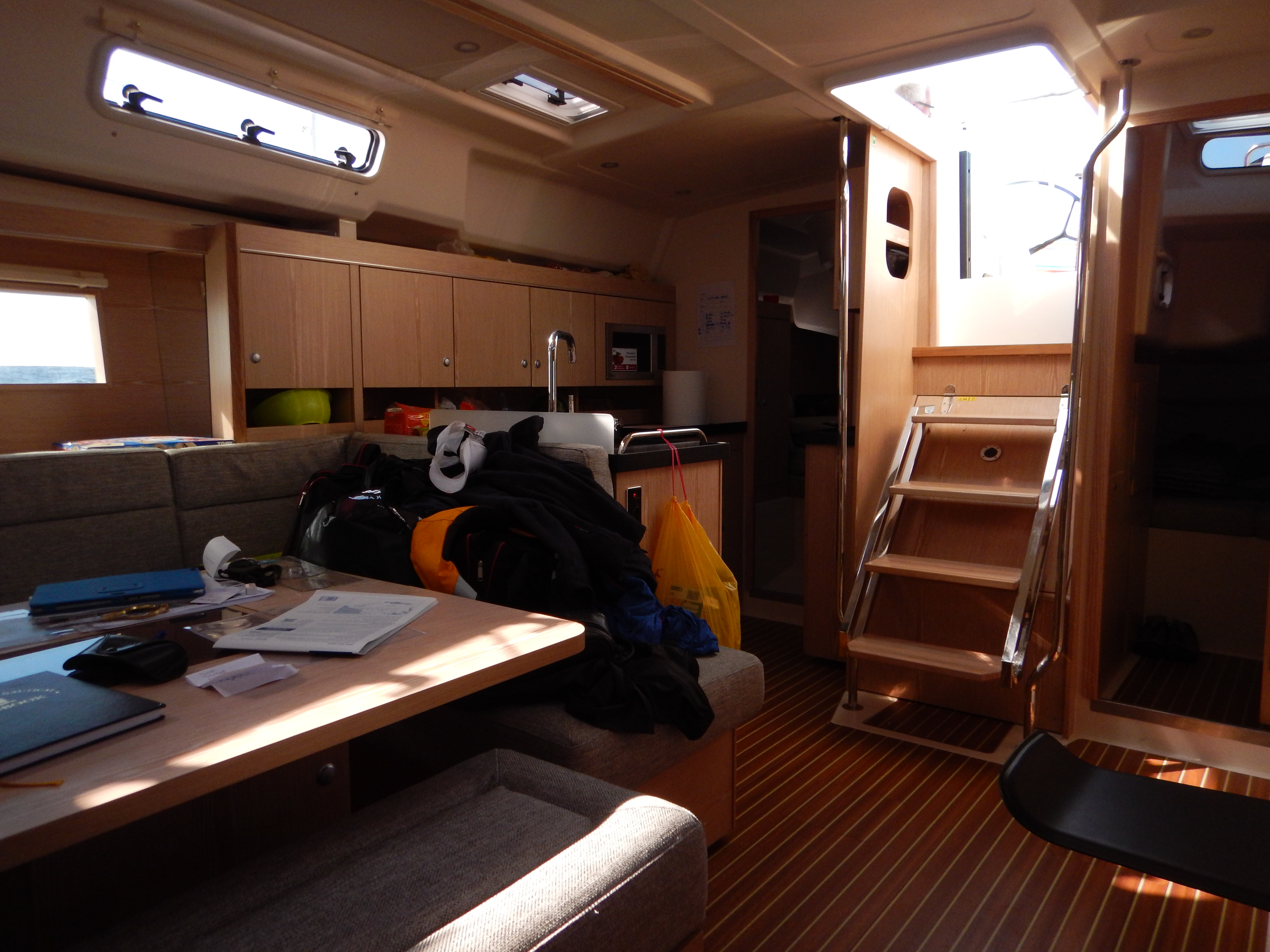
Now the great thing about buying a new boat is that you get to choose the bells and whistles and the bits and pieces according to your preference and purse.  All sorts of options are available to satisfy the needs of the discerning modern sailor.  For me I tended to lean towards the technological side and to that end I specified the best option for navigation that Hanse had on offer – the Navigation Plus package.  This consisted of a fully integrated B and G Zeus2 system with built in charts, wind and sail options and high specification autopilot, all repeated at both helming positions on deck.  I also have Category B AIS which enables us to see and be seen by shipping at distances of 20 – 30 miles – very useful for the waters on which we would be sailing.  So the very best of kit …. except that it did not work!

Well to be more precise the autopilot did not work.  When we asked it to navigate to a waypoint, it turned the boat through 180 degrees and tried to go back to where we had come!  When we set it to go to a waypoint it would fishtail violently before, if we were lucky, settling on a course.  Even then, in what was apparently a random process it would suddenly swing to starboard and the bleep alarm would sound.  We then had to switch to standby mode and re-set the system.  We tried to recalibrate it and that worked for a few hours but then the bleep bleep bleep alarm returned and we were back to manual helming.

Eventually we just had to live with the erratic, temperamental, idiosyncratic beast within the system.    I christened him “Mr Bean” for reasons which I hope will be obvious.

Trying to get it fixed proved beyond us and summoning help from Xavier, the boat agent, B and G or anybody for that matter while out in the middle of the Adriatic was challenging.  Mr Bean had won for the time being and we just had to get on with it.  The bleep bleep bleep became the all-pervading sound of the whole passage.  I just wanted you to make Mr Bean’s acquaintance.

Sibenik, 1st November 2015

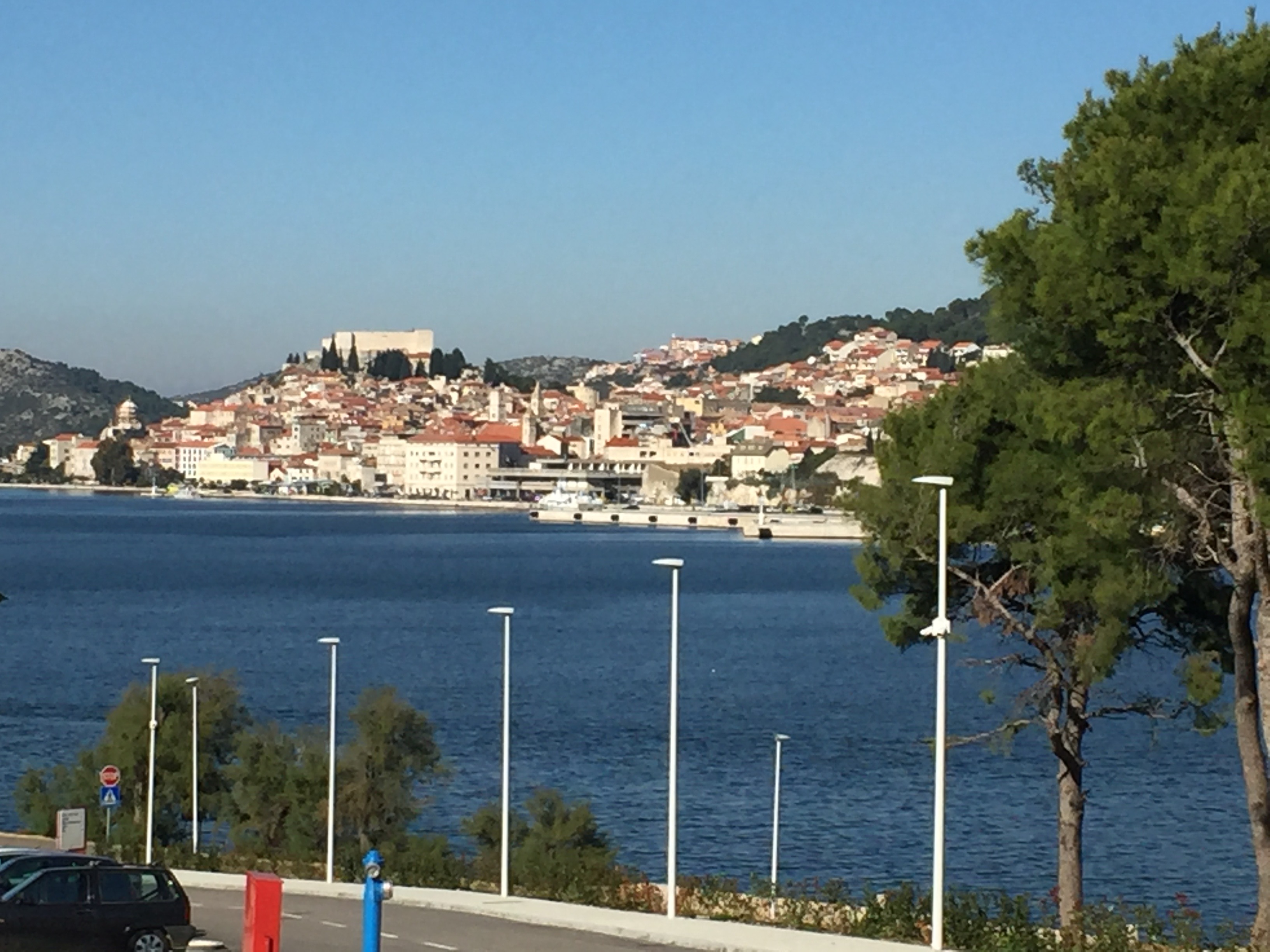
Sibenik is a beautiful little town near to Split which lies at the end of an amazing canal entrance which then opens out into a wide bay. It has an ancient cathedral with a distinctive barrel dome, which was under repair, an attractive waterfront and a very well appointed marina, Mandelina, with some seriously large superyachts.

IMG_0333
Mandalena Marina, Sibenik

We arrived in Sibenik at 1630 with the light rapidly fading. Unfortunately, when we got there it was shut! 1st November is the day when the people of Sibenik mark the “day of the dead” by taking the day off. I was rapidly losing the will to live myself as Alan and I set off to look for the port authority police to get the crew list and permission to sail in Croatian waters, “the Vignette”. The policeman had kindly explained to us where the port authority office was located. 45 minutes later and a few millimetres of shoe leather less we returned to the policeman to explain that we could not find the office and, furthermore, no one in the town seemed to know where it was. By the way we had still not clapped eyes on “the woman” and I was beginning to suspect subterfuge on the part of the policeman. Eventually he relented and put us in the back of his car and drove us to the office. We had in fact passed this office before but had assumed that, in common with everything else in Sibenik, it was shut. There was certainly no light on and the door did not budge when we tried it.

IMG_0334
Sibenik

The formalities were soon sorted and Alan and I returned to the policeman with the crew list so that he could stamp it and the customs office next door could look at it – or at least that is all that they seemed to do. What was becoming clear was that this entry /exit malarkey was a bit of a job creation programme. Remember we had not actually left the EU, but Croatia was not yet a signatory to the Schengen Agreement and, as the policeman kept telling me, “that is a problem”.

Still no sign of the woman!

We took the opportunity in Sibenik to have the Volvo Penta Deisel engine serviced. This should be done after 50 hours of running and although we had not yet reached that mark our next stop would be Corfu, some two days sailing away, by which time we would be well beyond the 50 hours. The Penta people in the marina were excellent and had us sorted in no time.

You get the feeling that Sibenik is a “coming place”.  Clearly there is a great deal of investment in the marina and its surrounding resort area, and inland there are various sites of interest.  It is really only a stone’s throw from Split so it is well situated.

I paid the fine the following morning and after a very acceptable lunch in the deserted but very impressive D-Resort Hotel in the Mandalena Marina we gave a fond farewell to the lovely town of Sibenik, vowing to return some day, when it was open, and, hopefully, meet “the woman”.

IMG_0335
View of Sibenik from the D-Resort Hotel.  The Police Authority docking pier is to the left of centre with the six black bollards.

I completed the exit formalities with the Croatian Police Authorities who informed me that as we were exiting Croatia we had to move into international waters (12 miles off-shore) as soon as practical.

Although we were all taking turns at helming, the task of getting us in and out of berths was left to Alan as he was the most accomplished in such matters. The exit from Sibenik was my first go at exiting and all went well until I got a little too close to a green lateral marking the exit to the bay and we touched the bottom.   It sounded like I had ripped the keel off and I feared the worst. Without hesitation Alan donned mask and snorkel and dived below the hull to inspect the damage. It turned out to be superficial and there was no leakage internally from the keel bolts inside. So, at 1550 on 2nd November and with a wary eye on the keel bolts, we set off for Corfu.

Bloody owners! Who would have them?

Murder in Murter!

Murter is a pretty little marina port just north of Split. It has many great facilities for sailors, some very kind people but, unfortunately, it is not an entry port for Croatia. The significance of this will become clear shortly. In the meantime, our priority was to find what had caused the water tank to empty and to dry out the bilges. It was late afternoon when we arrived. We did the best we could but other priorities emerged – food and beer! Our host in Murter was Gary Conway. An old colleague of Alan’s he was very helpful in describing to us the intricacies of entering Croatia in a boat. The rule is that you call into the nearest entry port once you have crossed into national waters. We had actually passed by four entry ports before finally calling into Murter which, as I mentioned earlier, is not an entry port. Now you might think why would the skipper get such a basic thing wrong and I would have to accept a good deal of the responsibility for this error, but I believe that the people in Portoroz should have made this clear before we left. The entry and exit procedures for each country are all slightly different. I’ll try to explain later.

We discussed our options with Gary and the general consensus was that we should just exit again without bothering the port authorities and hope for the best. None of us was particularly keen on this course but as it happens the decision was taken out of our hands. Early the next morning a policeman and his colleague turned up at the boat and it became clear that we had committed a serious offense in the eyes of the Croatian authorities which could only be corrected through the exchange of substantial amounts of money in the form of a fine.

In order to pay this fine we had to take the boat to the policeman’s office in Sibenik, about ten miles south, where he informed us we would not only meet up again with him and his colleague but, rather mysteriously, also with a woman! The policeman was very apologetic about all of this and had obviously deduced that the prospect of seeing a woman after some two days at sea in the grip of the troublesome Bora would soften the blow on we four weary sailors. As you can imagine the prospect of seeing this woman swung it for us, especially John.

In the meantime, John had discovered the source of the leak. The pipe connection on the deck shower unit was faulty and the pipe had detached, opening up the flow and causing the water pump to engage until all the water had exited the tank (thank you Hanse). Temporary repairs were made then it was off to Sibenik.

We encountered a regatta as we exited Murter.

Baptism of Fire – Portoroz to Murter, Croatia

In all my preparations for this passage I had been warned about the infamous Bora, which blows unpredictably in the Northern Adriatic and can obtain hurricane force dimensions. Like all such tales you tend to take them with a pinch of salt, but I would advise you not to do so in the case of the Bora. We did not experience hurricane winds but 32 knots and 3 to 4 metre waves were quite sufficient for me, and this was only the first night!

I was immediately thankful that I had engaged the services of Alan O’Boyle and was fortunate that John Campbell was also along. Their calmness and controlled skill throughout the all-night fight with the Bora was something to observe. I say observe because Jon and I did nothing but hang on and, before any of the others gets an oar in, I also christened the plumbing system of the boat and can confirm that the sink can cope with the entire contents of my stomach without any problem! Once I got that out of the way I was fine.

In fact Lothian Sky came through this baptism of fire with great credit and it became clear to me that this boat was well capable of getting us to Cyprus. The only problem we experienced with the boat was that, at some stage during the night, the entire contents of the fresh water tank (120 L) emptied into the bilges. Luckily we had loaded plenty bottles of drinking water but with our first stop in Murter in Croatia still some 10 hours away, washing became strictly rationed. By the way, for those of you unfamiliar with a sailing boat water used for other bodily purposes is drawn straight from the sea – so no problem in the bodily functions department.

Leaving Piran, a beautiful little town just south of Portoroz and our last exit point from Slovenia.

The calm before the storm. For reasons that you might be able to imagine, we do not have pictures of the storm so you will just have to take my word for it!

The day dawned on blue skies and relatively calm seas.  Alan and John went off to have a well earned sleep (Alan had completed a marathon stint of 10 hours at the helm in fierce sea conditions) and we proceeded on towards Murter.  The bilges were full despite our efforts to empty them using the bilge pumps, hand-bailing etc. At this stage we did not know the source of the problem but took limited comfort from the fact that at least the water did not taste salty. Our big fear was that the tank had somehow sprung a leak, which would have been a serious problem and could well have brought the expedition to a premature halt. Roll on Murter and running repairs.

The Crew

The boat adviser, general director of operations and all round sailing guru is Alan O’Boyle.

DSC00184
Alan O’Boyle

With his many years of experience, particularly in the waters of the Adriatic and Greek Islands Alan is a terrific asset and critical to the successful completion of the passage.

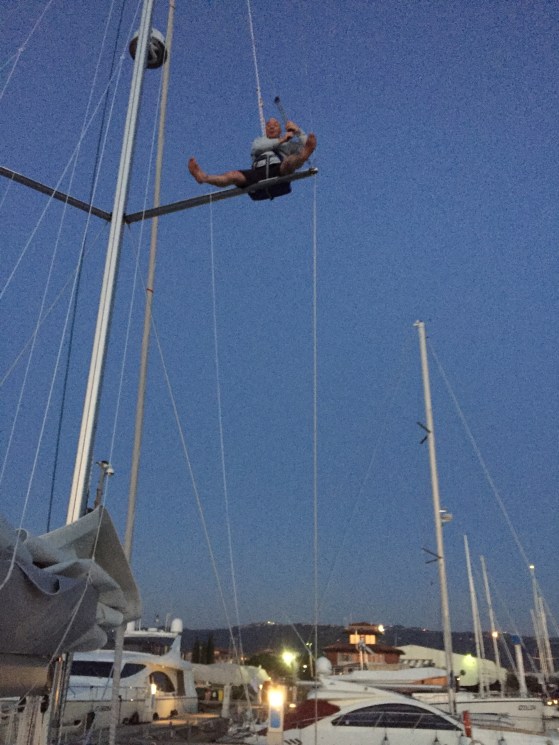
Here he is in one of his favourite positions – I think the expression is “legs akimbo”!

IMG_0299

John Campbell (spelt with a “P”) is also a very experienced sailor as well as connoisseur of all things of sophistication and alcoholic content!

IMG_0323
John Campbell

To John we owe a great debt for the provision of copious amounts of Hariboo’s just at the time they were needed – usually at 0200 hrs.

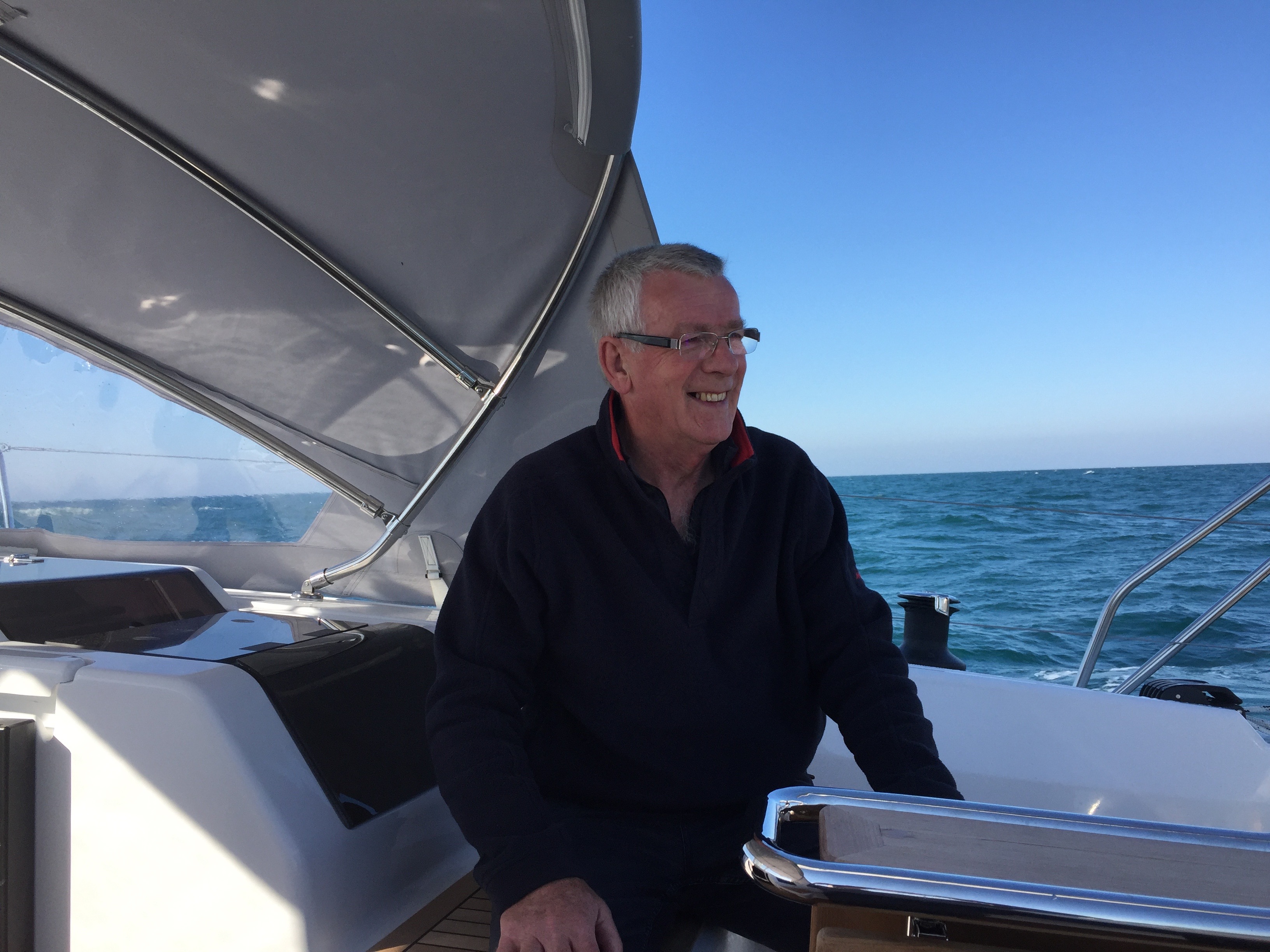
Jon Over is my brother-in-law and the senior member of the crew.

IMG_0325
Jon Over

His friends back in Northampton have asked me in particular to keep him out of trouble and away from any unsettling influences. Not sure what that means but no doubt there will be cause to reflect on this later.

IMG_0751

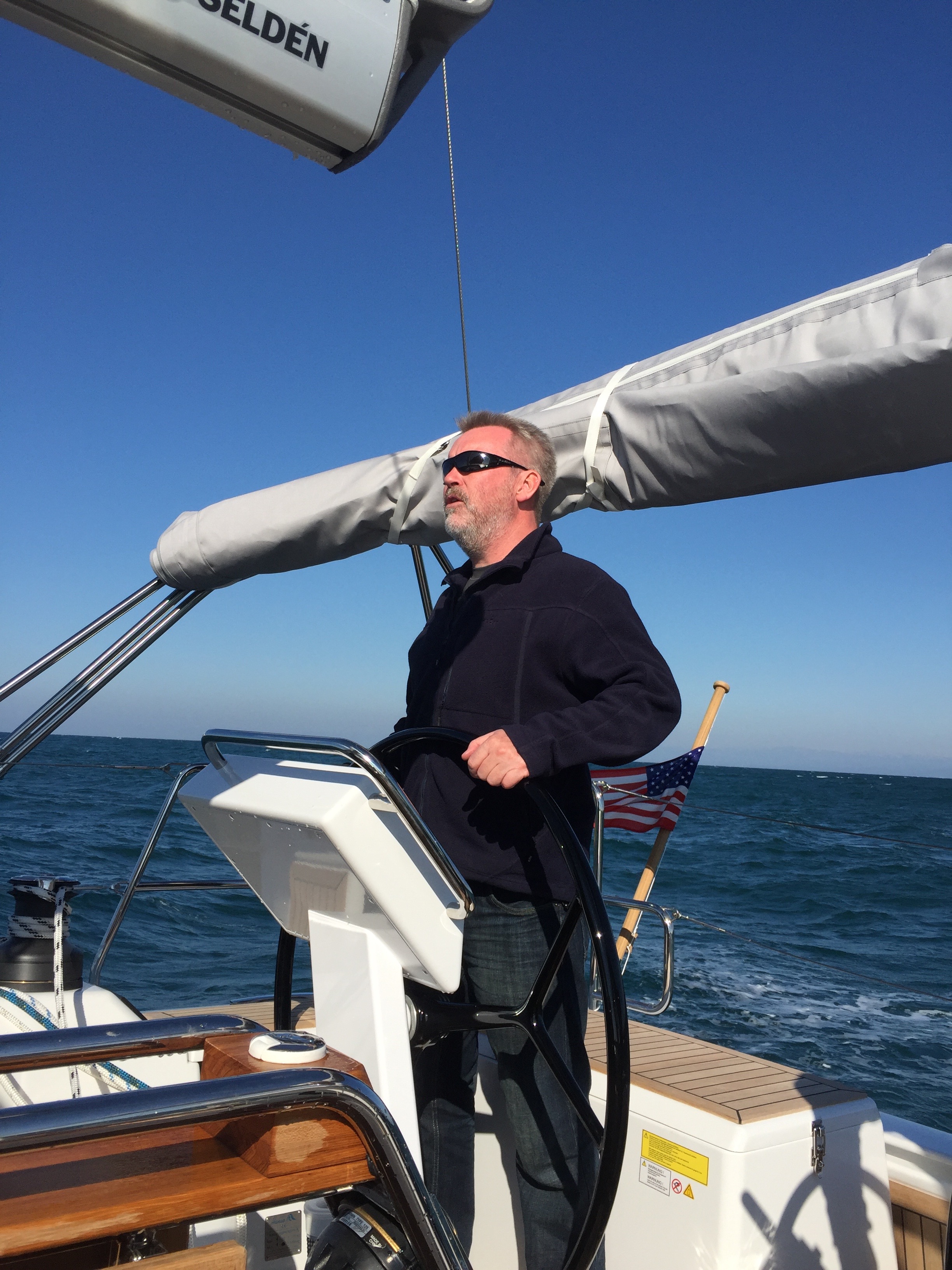
Finally me, Ian Young, the owner and technically the skipper, but clearly while sailing we all defer to Alan on all matters related to the boat and decisions regarding navigation and passage planning. My job was to deal with the various authorities and formalities of getting us in and out of countries and ports. More of that later.

The plan is for two further members to join us later in the passage.  I’ll give you the details at the time.

Where did the blog go?

OK, so you are probably asking yourselves, what ever happened to his blog?  Well the reality was that the blog needed to be on line in order for me to upload postings and getting internet access on the passage for my laptop was very problematical.  I could get it for my iPhone but posting to the blog from my iPhone proved to be beyond my capabilities.  So what will follow is not a contemperaneous account of the passage but it does reflect my thoughts and jotting as we progressed, so next best thing.  I will publish a posting every day from now.  Hope you enjoy!

WELCOME!

IMG_1534
Ruth and me

Over the next few weeks I will be sharing with you my experiences of the maiden voyage of my brand new sailing yacht, “Lothian Sky”. That’s me (right) with my younger daughter Ruth who will crew for a good part of the passage. There are five other crew members, but more of them later.

Below you can see our whole family (left to right) me, Joan, Ruth and Jen and Jen’s husband Garry. Joan and Jen are not keen on sailing but we will work on them.  We have photos of Joan on the helm but I don’t have permission to publish!

OLYMPUS DIGITAL CAMERA
THE FAMILY

“LOTHIAN SKY”

photo-exterieur-hanse-455-273820
Generic Photo Hanse 455

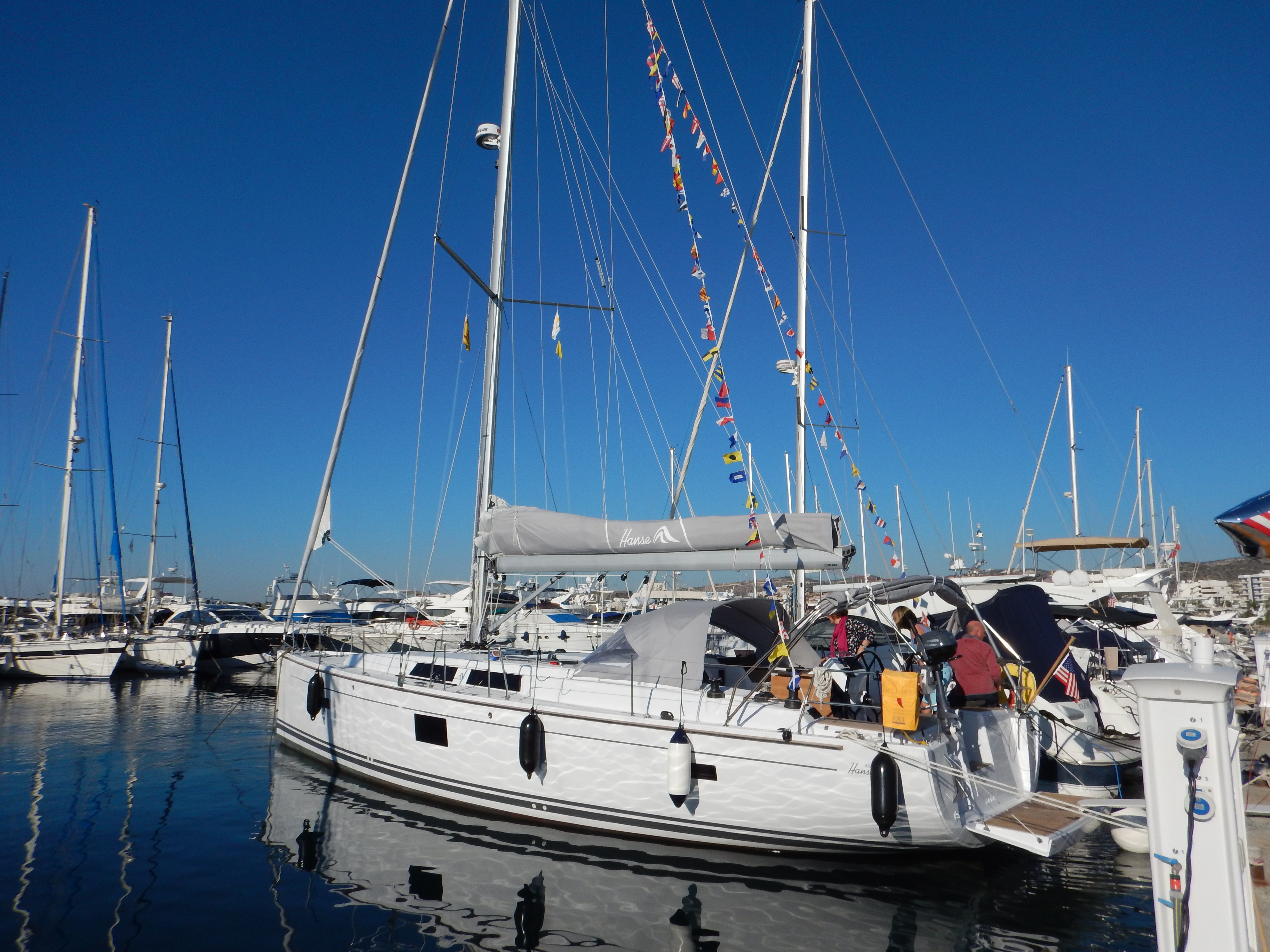
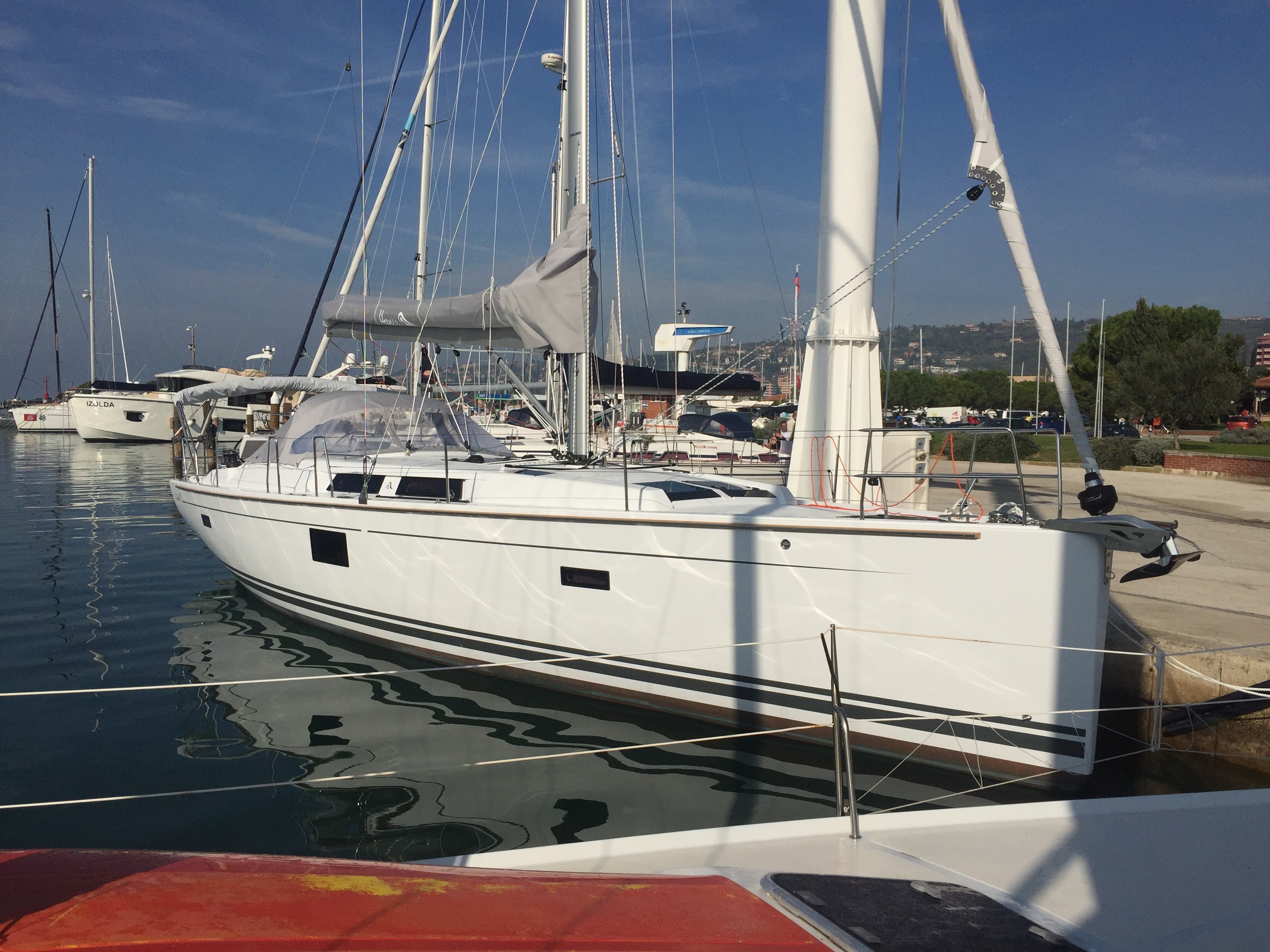
She is a Hanse 455, one of the new models from Hanse in 2014.  45ft with a sloop rig, self-tacking jib, a bright blue ginnaker and as many bells and whistles on as I could afford! As we go through the passage I will explain more about her. The photo is the Hanse generic as she is still being built as I write. I will add a proper picture once I get to Portoroz.

So “Lothian Sky”, what is that about?  Well Lothian is that area of Scotland famed in ancient story which embraces the capital city of Edinburgh and where I was born.  Gorebridge is an unremarkable place I would suppose but it is the happy place where I grew up.  Situated on a rising shoulder of land to the south of Edinburgh it looks out to the North-West to the Pentland Hills, to the South the border hills and to the North a sky that stretches high across the Esk Valley to Arthur’s Seat, the Forth Estuary and the hills of Fife beyond – Lothian Sky.  There is also a reference to it in the song from the Proclaimers, “The Joyful Kilmarnock Blues”, which is where I got the idea.

THE MAIDEN VOYAGE

From Portoroz in Slovenia, through the Adriatic, the Greek islands and then finally to Cyprus, a distance of over 1200 nautical miles.  Those interested in more detail can have a look here .There are many waypoints on the route map but essentially the passage will be in six parts:

  • Portoroz to Murter in Croatia to service the engine and other repairs as necessary
  • Murter to Dubrovnik for R&R
  • Dubrovnik to Kefalonia to pick up Ruth
  • Kefalonia through Corinth Canal to Athens to pick up Alistair
  • Athens to Rhodes
  • Rhodes to Limassol

Lots to do to prepare.

  • organise essential safety equipment, e.g life-raft, flares etc. – its amazing how much the boat builder does not include in the price! But there is a great chandler in Portoroz (“Skipper”) and Marijo has been brilliant in providing cost-effective solutions to my various problems.
  • coordinate the gathering of the crew (more of that later)
  • transport the boat by road, rig it and copper coat the hull (much appreciation to Xavier Bouin from Tan in Dubai for getting that sorted)
  • register the boat, license the radio, obtain an EPIRB
  • documents for the crew, photos, passports etc
  • courtesy flags
  • launching and naming ceremony
  • and on and on and on ……

The plan is to leave Portoroz around 28/29 October and I expect the passage to take about two weeks. Ruth will join us at Kefalonia on 7th November and Alistair Cameron will join us in Athens. That means we will have a crew of six for the long stretch from Rhodes to Limassol (two days non-stop). Details of the crew will be posted later.